What is APC by Schneider Electric?
APC (American Power Conversion) is the power-protection brand of Schneider Electric and the most widely deployed UPS systems manufacturer in North America. APC is the default specification for IT closets, server rooms, medical labs, point-of-sale systems, and light-industrial control cabinets — driven by the breadth of the catalog, the three-year electronics warranty on most units, and the availability of genuine APCRBC replacement batteries long after a UPS is discontinued.
UPSPLUSBATTERY.CA stocks more than 400 APC part numbers across every active product family, along with the matching APCRBC replacement batteries — shipped nationwide with no cross-border brokerage or US-dollar surprises at checkout.
APC UPS product families explained
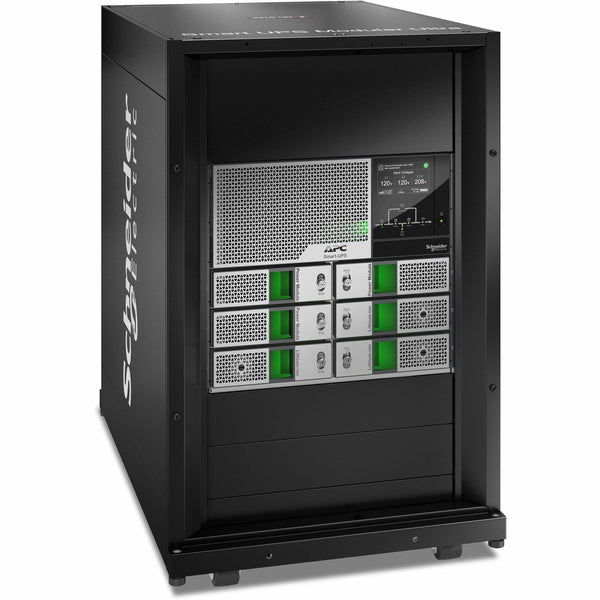
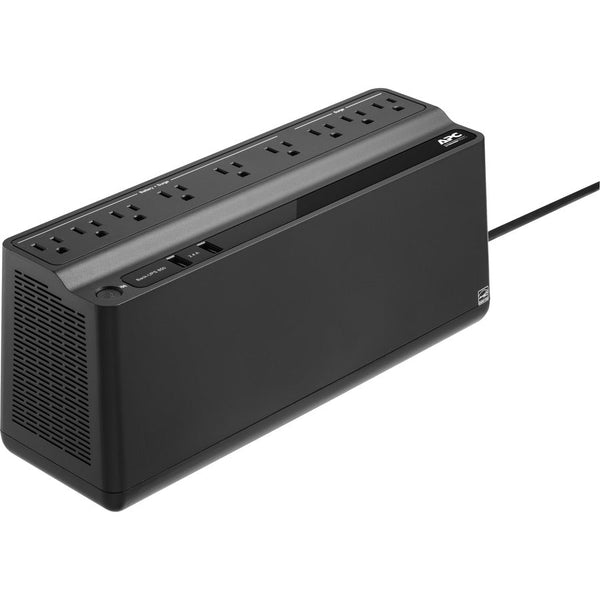
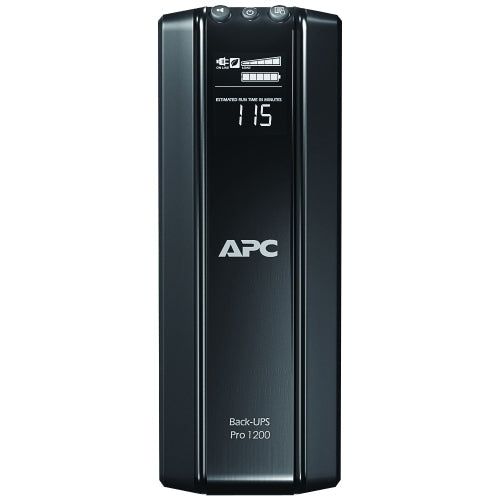
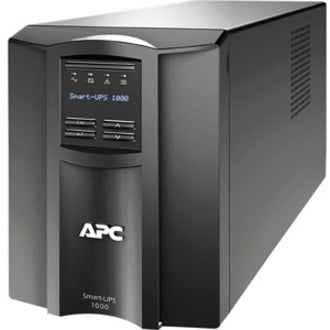
APC does not sell a single "UPS." It sells eight distinct product families, each engineered for a specific load type, topology, and form factor. Choosing the wrong family is the single most common sizing mistake buyers make: a Back-UPS protecting a rack of servers will fail; a Smart-UPS SRT protecting a home PC is overkill that will never pay itself back. The table below maps every current APC family to the load it is built for.
The overwhelming majority of small-business buyers land on the Smart-UPS family (SMT, SMX, and SMC product lines) or on a line-interactive APC UPS for rack-mounted gear. If you are looking at 5 kVA or higher, Smart-UPS SRT and Smart-UPS Ultra dominate the shortlist.
How to choose the right APC UPS
Sizing: VA and wattage
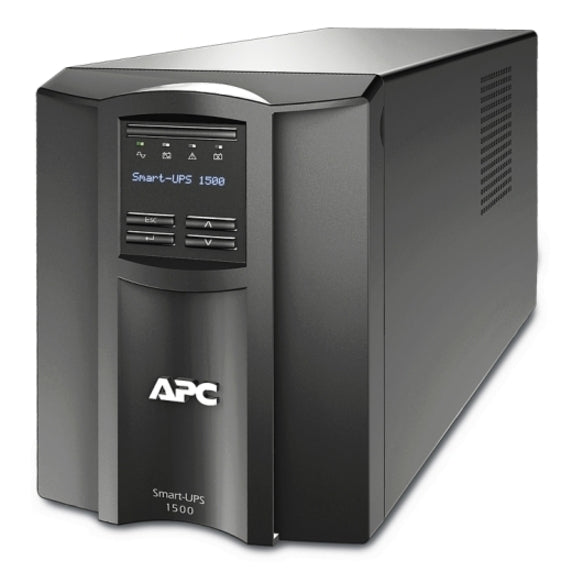
Every APC UPS is rated in both volt-amps (VA) and watts (W). You must check both. VA is the apparent power the UPS can deliver; watts is the real power the equipment actually draws. On legacy APC Smart-UPS models (SMT line) the relationship is usually VA × 0.6 = W — for example, a Smart-UPS 1500 (SMT1500) is rated at 1500 VA and 1000 W. On newer unity-power-factor models — the Smart-UPS Ultra, the Smart-UPS SRT 1 kVA, 1.5 kVA, 6 kVA, 8 kVA, and 10 kVA — VA equals watts, which means a 5000 VA unit also supplies 5000 W. This matters because power-hungry blade servers, GPU workstations, and modern IT loads draw close to unity, and an older 0.6-PF UPS that looks big enough on paper will trip on overload.
Walk through your rack with a clamp meter or add up nameplate watts from every device, add a 25% growth buffer, and match that number to the UPS's watt rating — not its VA rating. If you want a guided walkthrough with the math done for you, our UPS sizing guide and the APC runtime calculator both work off the same wattage inputs.
Topology: line-interactive vs double-conversion online
APC builds three topologies, and the topology decision is usually more important than VA sizing.
Standby (offline): Used only on the entry-level Back-UPS. The UPS passes utility power straight through and switches to battery when the line drops. Transfer time is 6–10 ms. Acceptable for desktops; unacceptable for servers.
Line-interactive: Used on Back-UPS Pro, Smart-UPS, and Smart-UPS X. An automatic voltage regulator (AVR) corrects brownouts and surges without drawing from the battery, which dramatically extends battery life in regions with unstable grid voltage. Transfer time is 2–4 ms. This is the right topology for 80% of SMB server, networking, and POS loads. See our line-interactive APC UPS collection for the full list.
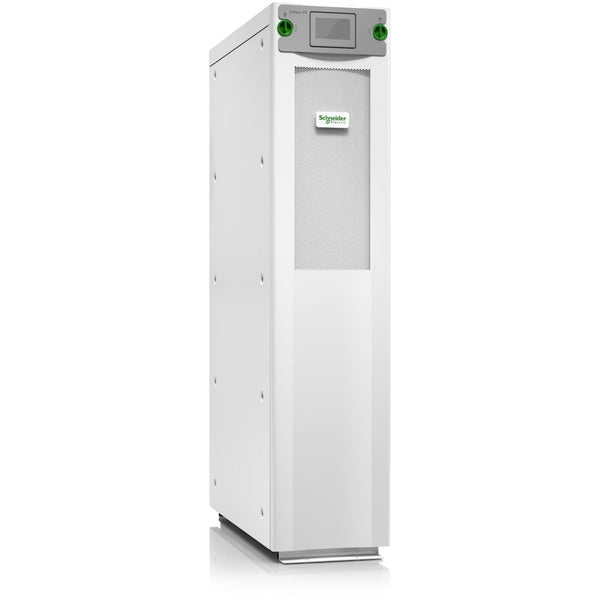
Double-conversion online: Used on Smart-UPS SRT, Smart-UPS Ultra, Symmetra, and Galaxy. The load runs permanently from the inverter, so transfer time is effectively zero and output voltage/frequency are fully regenerated. This is the only topology suitable for medical equipment, VoIP PBX systems, precision lab gear, and any three-phase input. Read line-interactive vs online UPS for the decision criteria.
Form factor: tower, rackmount, or convertible
APC offers four physical formats: tower (floor or desk), 1U–6U rackmount, rack/tower convertible, and 2U short-depth (Smart-UPS Ultra). For a server rack, a rackmount or convertible chassis is always preferable — it frees floor space, improves airflow, and the rail kits ship with the unit on most SRT and SMX models. Use the filters on the left of the grid below to narrow by chassis type, or browse our APC Smart-UPS collection for the convertible units that cover most rack deployments.
APC Smart-UPS spec reference
The eight SKUs below cover roughly 80% of what SMB buyers actually purchase. Use this as a quick-reference shortlist; full specs and live stock are on the individual product pages.
Every model above ships with PowerChute management software. Smart-UPS SRT 5 kVA and above include an embedded AP9641 Network Management Card; on lower-tier Smart-UPS the NMC is an add-on SmartSlot option.
Replacement batteries for APC UPS
APC uses a naming convention called APCRBC (APC Replacement Battery Cartridge). Every Smart-UPS, Back-UPS Pro, and Smart-UPS SRT ships with the APCRBC number printed on the unit label and listed in the user manual; that number is the only correct replacement reference. The most commonly searched cartridges are APCRBC124 (fits the SMT2200 and SMT3000 line), APCRBC123 (fits the SMT750 family), APCRBC133 (fits the SMT1500), and APCRBC140 (fits the Smart-UPS SRT 5/6 kVA family).
Genuine APCRBC cartridges come pre-assembled with the correct connector, correct voltage stack, and a tested-date sticker that satisfies APC's warranty conditions. Compatible third-party cartridges cost less but should be matched carefully on voltage, amp-hours, and connector — see our full APC RBC batteries collection or read the APC battery compatibility guide for the full matrix. For an APC battery replacement across any APC UPS, start with the APCRBC number and cross-reference against the model.
Installation, warranty and support
Every APC UPS sold by UPSPLUSBATTERY.CA ships from a Canadian warehouse with full manufacturer warranty — typically three years on the electronics and two years on the battery, five years on lithium-ion Smart-UPS Ultra and SRTL models. Our team handles pre-sales sizing, RMA coordination, and post-installation commissioning questions by phone and email.
For most line-interactive Smart-UPS installations, the unit ships ready to plug in — attach the battery connector, fit the rail kit, and connect PowerChute. For Smart-UPS SRT 5 kVA and above, hard-wire input may be required and should be completed by a licensed electrician per CSA. Three-phase Galaxy and Symmetra installations always require commissioning by a qualified Schneider-authorised technician.
Frequently asked questions
What is the difference between APC Back-UPS and Smart-UPS?
Back-UPS is entry-level: standby topology, simulated sine wave on most models, no AVR, shorter warranty. Smart-UPS is the business-grade line: line-interactive topology with AVR, pure sine wave output, LCD display, PowerChute integration, network manageable, and a three-year electronics warranty. If you are protecting anything with an active PFC power supply (most servers, modern workstations, and many NAS units), Smart-UPS is the minimum specification — simulated sine wave from a Back-UPS can cause those supplies to reject the input.
How do I know what size APC UPS I need?
Add up the nameplate wattage of every device that will plug into the UPS, multiply by 1.25 for a growth buffer, and pick a UPS whose watt rating (not VA rating) exceeds that number. For example, a typical 1U server at 400 W plus a switch at 80 W plus a firewall at 40 W equals 520 W × 1.25 = 650 W — a Smart-UPS 1000 (SMT1000, 700 W) is the minimum fit; a Smart-UPS 1500 (SMT1500, 1000 W) gives real headroom for runtime. Our UPS sizing guide walks through the full method with worked examples.
Are APC UPS units compatible with 240V?
Yes. APC ships distinct SKUs for 120 V (LV) and 208/240 V (HV). In North America, single-phase outlets are 120 V at standard wall receptacles and 208/240 V at NEMA L6-20, L6-30, and L14-30 receptacles, which are common in server closets. Smart-UPS Ultra (SRTL5KRM2UT) and most Smart-UPS SRT models accept 208 V and 240 V natively on the same unit via user-selectable settings. Always confirm the suffix on the model number — LV indicates 120 V, HV/XLI indicates 208/230/240 V.
How long do APC UPS batteries last?
APC rates its sealed lead-acid batteries for three to five years of useful life in a climate-controlled environment (20–25 °C). Lithium-ion batteries in the Smart-UPS Ultra and SRTL series are rated for ten years. High ambient temperature is the single largest factor that shortens life — every 8 °C above 25 °C roughly halves battery life. PowerChute and the front-panel LCD will flag a battery as "replace" once internal impedance crosses the threshold; replace promptly once that warning appears, because the UPS can no longer guarantee rated runtime.
Can I replace APC UPS batteries myself?
On every current Back-UPS, Smart-UPS, Smart-UPS X, Smart-UPS Ultra, and Smart-UPS SRT, the battery cartridge is user-replaceable and hot-swappable — you can swap it while the UPS continues to protect the load. Always use the APCRBC part number listed on the unit label, and follow the front-panel prompt to reset the battery install date so PowerChute can recalculate runtime. Symmetra and Galaxy battery modules can also be swapped live but should be done by trained personnel because of the string voltage involved.
What is an APCRBC number?
APCRBC stands for APC Replacement Battery Cartridge. It is the only part number APC and Schneider Electric guarantee to fit a given UPS. It is printed on the unit label, stamped inside the battery compartment, and listed in every user manual. Substituting a raw-cell battery for an APCRBC cartridge will still power the UPS but voids the APC warranty, and in most cases the UPS will not report correct runtime through PowerChute until a genuine APCRBC is installed.
How does APC compare to CyberPower for business use?
For home and entry-level SOHO use, CyberPower is price-competitive and has a strong warranty. For business-grade rack deployments, APC dominates on three fronts: the PowerChute management ecosystem is deeper and integrates natively with VMware and Hyper-V; the network management card (AP9641) is the de-facto standard for SNMP monitoring; and APC's replacement battery availability extends fifteen years or more after a model is discontinued, which is critical for long-lifecycle racks. For a line-by-line comparison see our CyberPower UPS collection alongside the APC Smart-UPS range.
Do APC UPS units come with a warranty?
Yes. Every APC UPS sold by UPSPLUSBATTERY.CA carries the full manufacturer warranty — three years electronics and two years battery as standard on Smart-UPS and Smart-UPS SRT, five years on Smart-UPS Ultra and SRTL lithium-ion models. Warranty is serviced by our Canadian team in coordination with Schneider Electric Canada, so RMA turnaround does not require cross-border shipping.

 In stock